
To import quilling cards into Ireland from Vietnam, you clear them into the EU through an Irish customs agent (with an EVFTA origin document if you want the preferential treatment), account for Irish VAT at the standard rate that Revenue applies to greeting cards, and make sure the product has an EU-based responsible business named on it. Get those three pieces settled first, then build your order around an Irish card calendar that peaks at different moments from the rest of Europe. This guide walks through each step from the buyer’s side, as of 14 November 2026.
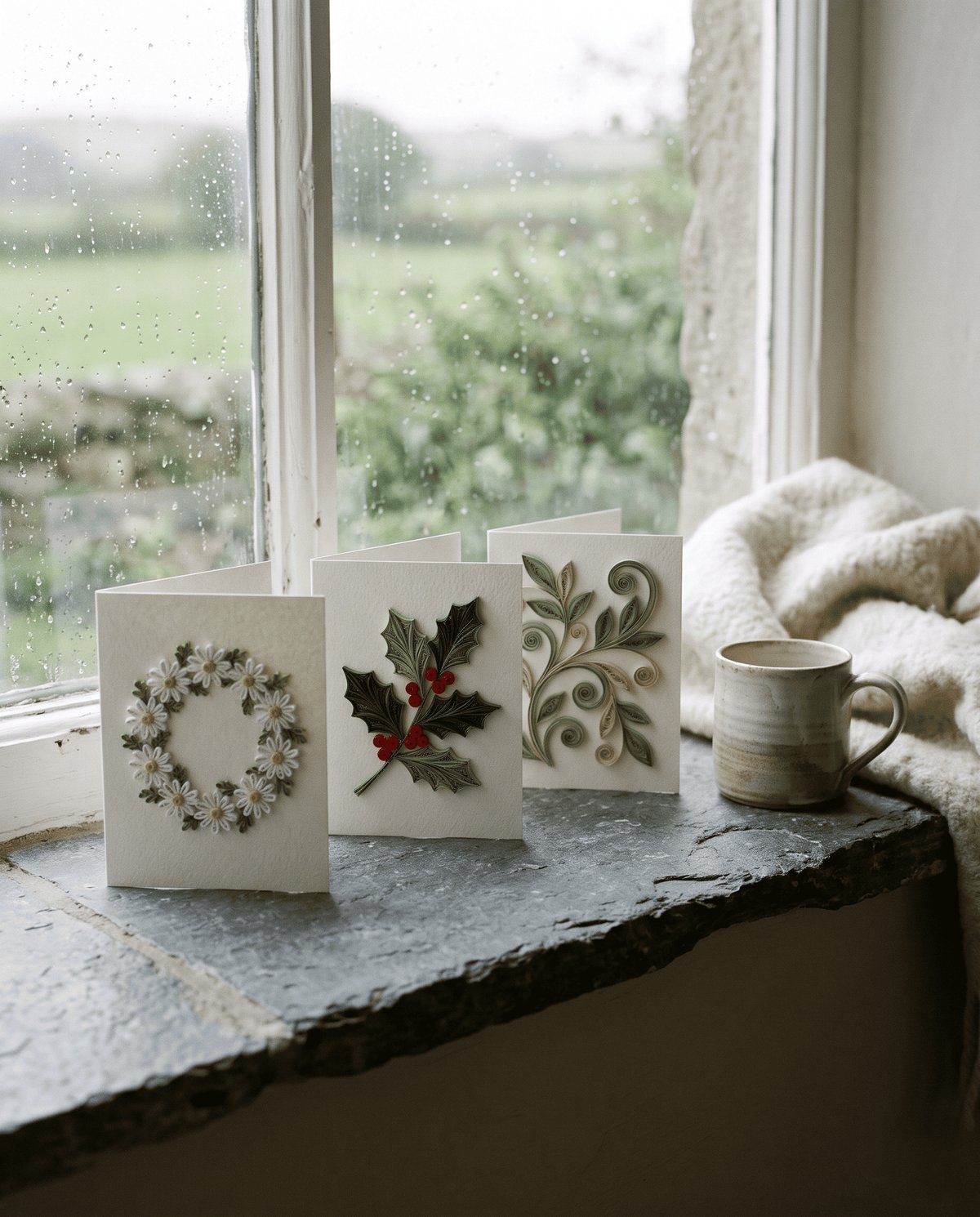
Ireland is a small market with a big card habit. An Post says it delivers more than 3 million cards a day in the run-up to Christmas, and the same December 2025 survey found that more than half of people display their cards on the fireplace. Handmade, textured cards suit that display culture well, which is why quilled designs from Vietnam make sense for Irish gift shops, card specialists and craft retailers.
Why are Irish retailers looking beyond UK card suppliers?
For years many Irish shops bought cards through UK wholesalers. Since Brexit, goods from Great Britain arriving in Ireland are imports from outside the EU, with customs formalities on every consignment. Eurostat trade data summarised by The Trade Hub shows that the United Kingdom still supplied about 31% of the EU’s imports of printed cards (heading 4909) between January 2022 and March 2026, behind China at about 61%, with Vietnam a small fourth at around 2%.
The practical point for an Irish buyer: if a UK-sourced range already involves customs paperwork, buying direct from the country of origin adds very little extra admin, and it gives you more control over design, private label packaging and timing. It also lets you offer something that is not on every other shelf in town.
What paperwork do you need to import quilling cards into Ireland?
The table below shows who handles each piece. Your supplier prepares the export side in Vietnam; your Irish customs agent handles the import side.
| Document or step | What it does | Who prepares it |
|---|---|---|
| Commercial invoice | States the goods, value, Incoterm and parties; the base for the customs value | Supplier in Vietnam |
| Packing list | Carton-by-carton contents, weights and dimensions so customs and the warehouse can check the shipment | Supplier in Vietnam |
| Proof of origin (EUR.1 or statement on origin, as the EVFTA rules allow) | Supports a claim for EVFTA preferential treatment | Supplier or Vietnamese issuing authority; your agent checks it before arrival |
| Bill of lading or air waybill | Transport contract and title document for the cargo | Forwarder or carrier |
| Irish import declaration | Lodged in Revenue’s customs system with the commodity code and your EORI number | Your customs agent, on behalf of the importer of record |
| Import VAT | Accounted for at import, or through postponed accounting on your VAT return | Importer of record |
At Viet Farm Vision we send the commercial invoice, packing list and certificate of origin with every export order, and we share carton photos and a video before shipping so your agent has the detail early.
Customs duty, EVFTA and Irish VAT on handmade greeting cards
Duty and the EVFTA
Ireland applies the EU common customs tariff, so the duty line is the same whether your cartons land in Dublin, Cork or Shannon. You can look up the commodity code, the standard third-country rate and the EVFTA preferential rate in the European Commission’s Access2Markets database or in TARIC. We deliberately do not quote a rate here: the right code depends on how your exact product is built (a plain quilled card, a card set in a box, a card with an attached gift item), and that classification is a call for your customs agent.
Irish VAT on greeting cards
Revenue’s guidance on printed matter lists greeting cards, including business and memorial cards, at the standard VAT rate, not the reduced rate that applies to some other printed products. Import VAT is calculated on the customs value plus any duty.
The useful part for cash flow: VAT-registered Irish businesses can use postponed accounting, declaring the import VAT on their VAT return instead of paying it at the border. Ask your agent to set this up before your first shipment arrives.
What product rules apply to quilling cards sold in Ireland?
An EU responsible person on the product
Since 13 December 2024 the EU’s General Product Safety Regulation has applied to consumer products, including greeting cards. In practice, products placed on the EU market need an economic operator established in the EU, and contact details on the product or its packaging. When you import directly, that is usually your Irish company. Send us the wording and we print it on the cello sleeve label, backer card or box.
Packaging obligations
Ireland runs extended producer responsibility for packaging, largely through the Repak compliance scheme (see Ibec’s overview of the EPR model). The company that first places packaged goods on the Irish market is normally the one with the obligation. Plan your sleeves, inserts and outer cartons with that in mind; lighter, simpler packaging is easier to report and often protects just as well. Our greeting card packaging guide covers the options.
Is the EU Deforestation Regulation a concern?
Paper products sit close to the EUDR, so buyers often ask. According to the European Commission, the regulation now applies from 30 December 2026 for large and medium operators, and industry summaries such as this update for the printing sector report that printed products of chapter 49 were taken out of scope by the 2025 amendment. Confirm how this applies to your exact product code with your agent, especially for card sets with non-paper components.
Irish card calendar: when to order quilling cards for 2027
Ireland’s card year does not line up with the US or continental Europe. Mother’s Day in Ireland is Mothering Sunday in Lent, which falls on 7 March 2027, two months earlier than in the US. Communion and Confirmation season in spring is a major card occasion of its own; the Irish Post’s guide to First Holy Communion explains why it matters so much to Irish families. Sympathy cards are also a steady year-round line, and our wholesale sympathy cards guide covers designs that suit them.
| Occasion (2027) | When it sells | When to confirm designs with your supplier |
|---|---|---|
| Valentine’s Day (14 Feb) | Late January to mid February | By late November 2026 |
| Mothering Sunday (7 Mar) | February to early March | By early December 2026 |
| St Patrick’s Day (17 Mar) | Early to mid March | By early December 2026 |
| Communion and Confirmation | March to June | By January 2027 |
| Father’s Day (20 Jun) | Late May to June | By February 2027 |
| Christmas | October to December | By May 2027 |
These are planning windows, not fixed lead times. Timing depends on design complexity, whether you need new samples, the size of the order and whether you ship by sea or air. Tell us your in-store date and we work backwards from it.
Which quilled designs suit Irish shelves?
A few patterns come up repeatedly with buyers serving the Irish market:
- Calm, natural palettes: sage, moss and soft greens, cream and slate, with florals such as daisies, primroses and wild roses.
- White and silver for Communion and Confirmation, with doves, crosses and lilies, plus space inside for a handwritten message.
- Christmas designs that read well on a mantelpiece: wreaths, holly and robins with depth that catches side light.
- Bilingual or Irish-language greetings printed on the inside or on the sleeve, supplied as your own artwork.
- Sympathy and thinking-of-you cards with restrained colours.
We make cards to your own designs as well as from our existing range, and we can print your logo on the card back and supply private label packaging. Browse the handmade greeting cards range for starting points. If you also sell in Northern Ireland or Great Britain, our UK import guide covers the rules on that side of the border.
How do you order quilling cards from Vietnam for an Irish store?
- Send your designs or pick from the range, with quantities per design and your target in-store date.
- Approve a pre-production sample before anything goes into production.
- Our partner workshop makes the cards by hand, with a mid-production check at the workshop.
- Every card is inspected before packing, then cartons are counted and we send you photos and video before dispatch.
- Your forwarder and customs agent bring the goods into Ireland, with the export documents ready in advance.
The cards are made by skilled artisans, mostly local women who live near our partner workshops in Vietnam. We reply to every quote request within one business day.
Frequently Asked Questions
Do I need an EORI number to import quilling cards into Ireland?
Yes. Any business lodging customs declarations in the EU needs an EORI number, and Irish businesses register for one with Revenue. Your customs agent will ask for it before your first shipment, so arrange it early.
What VAT applies to greeting cards imported into Ireland?
Revenue lists greeting cards at the standard VAT rate. VAT-registered businesses can usually use postponed accounting to declare import VAT on their VAT return rather than paying it at the point of import. Check the current rate and your eligibility with your accountant or agent.
Can I use the EVFTA when importing cards from Vietnam into Ireland?
Ireland is an EU member, so the EU–Vietnam Free Trade Agreement applies. To claim preferential treatment, the goods must meet the agreement’s rules of origin and arrive with a valid proof of origin. Your agent checks the document and the commodity code before the goods land.
How early should I order Christmas quilling cards for Ireland?
Irish Christmas card sales start in October, so most retailers confirm designs in late spring and ship by sea in the summer. If you need new custom designs, add time for sampling and approval. Contact us early and we will map out a timeline backwards from your shelf date.
Can you add Irish-language greetings or my shop’s logo?
Yes. You can supply Irish-language or bilingual text for the inside of the card, the sleeve or the backer card, and we can print your logo and use your own private label packaging. We confirm every text detail on the pre-production sample.
Ready to bring quilled cards to your Irish customers?
Send us your designs, quantities and in-store dates through our Request a Quote page. We reply within one business day with options, sampling steps and a timeline built around the Irish card calendar.