
Vietnam’s wood exports in the first quarter of 2026 reached US$3.99 billion.
Hoang Minh |15:17, 20/04/2026 | dantocphattrien.vietnamnet.vn
Vietnam’s wood exports in the first quarter of 2026 reached US$3.99 billion, an increase of 1.4% compared to the same period in 2025, showing that the wood industry is gradually recovering after a difficult period, although it still faces many challenges from the international market.
According to the latest figures, in the first three months of 2026, Vietnam’s exports of wood and wood products reached nearly US$4 billion. While the 1.4% increase is not high, it is a positive sign given that global consumer demand has not yet fully recovered.
Notably, March 2026 alone recorded significant growth with exports exceeding US$1.3 billion, indicating improved orders and a gradual market recovery.
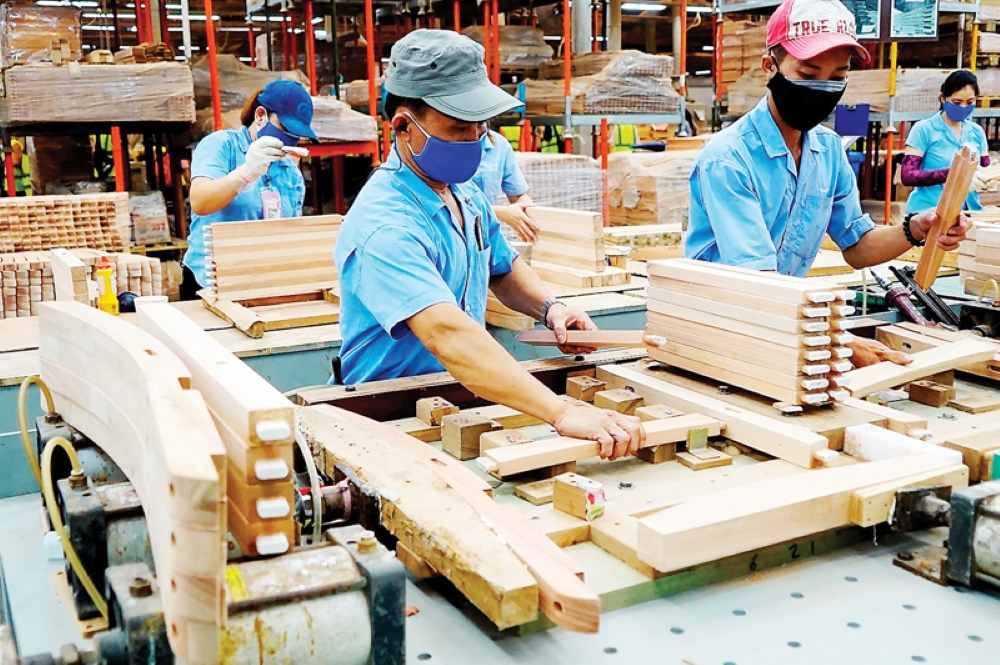
Many businesses reported that export orders began to recover from the end of the first quarter, especially in the furniture and household wood products group.
The United States continues to be the largest export market for Vietnam’s wood industry, accounting for approximately 49% of total export value, equivalent to nearly $2 billion in the first quarter of 2026.
However, exports to this market decreased by more than 8% compared to the same period last year. The main reasons stem from weakening consumer demand in the US, along with increasingly stringent technical barriers and trade policies.
The decline in this key market also highlights the urgent need to reduce dependence on a single market.
While the US market slowed down, many other markets recorded impressive growth, such as exports to China increasing sharply by nearly 47%; the European Union (EU) market increasing by about 48%; and Japan maintaining stable growth.
In particular, EU markets such as the Netherlands, Germany, and France recorded double-digit growth, thanks to the effective utilization of free trade agreements like the EVFTA.
Expansion into these markets not only helps increase export value but also contributes to enhancing the value and standards of Vietnamese wood products.
Despite signs of recovery, the Vietnamese wood industry still faces many challenges, including stringent requirements for tracing the origin of legally sourced wood; increasingly high environmental and sustainable development standards; fluctuating logistics and raw material costs; and fierce competition from major exporting countries.
Especially, regulations related to combating trade fraud and origin requirements in major markets are putting considerable pressure on businesses.

According to its development plan, the Vietnamese wood industry aims to achieve an export turnover of approximately US$25 billion by 2030. To realize this goal, experts suggest focusing on developing sustainable domestic raw material sources; increasing the added value of products; promoting deep processing, design, and branding; and diversifying export markets.
The transition to a green, environmentally friendly production model is considered an inevitable trend to enhance long-term competitiveness.
The results of the first quarter of 2026 show initial signs of improvement in the Vietnamese wood industry. However, the modest growth rate indicates that the recovery process still requires more time.
In the context of a volatile global economy, proactive adaptation, market expansion, and product quality improvement will be decisive factors in maintaining the wood industry’s growth momentum in 2026 and subsequent years.