
Quilling techniques are the handful of ways a strip of paper is rolled, pinched, looped or cut so that it holds a shape on a card, and for a wholesale buyer they decide three things at once: how the design reads on a shelf, how well it survives shipping, and how much hand time each card needs. If you understand the six or seven core techniques, you can brief a supplier precisely, judge samples faster and avoid designs that look beautiful on screen but are fragile in a carton.
This guide explains each technique in plain trade language, shows where it is used on greeting cards, and gives you a checklist for writing a design brief.
What are quilling techniques, and why should a card buyer care?
Quilling, also called paper filigree, is the craft of rolling narrow strips of paper into coils and then shaping and gluing them into a design. Historic Deerfield, the museum in Massachusetts, describes it as twirling thin paper strips into coiled designs and traces its use as a cheaper substitute for metal filigree, with nuns in France and Italy decorating religious objects in the 1600s and young women in eighteenth-century England using it on screens, furniture and framed coats of arms (Historic Deerfield).
The same small vocabulary of coils and pinched shapes still sits behind every modern quilled card. Once you can name those shapes, three things change for you as a buyer:
- You can describe exactly what you want instead of sending a mood board and hoping.
- You can see why two designs that look similar in size carry different lead times.
- You can spot which elements are most likely to be crushed in transit and ask for the right protection.
The core quilling techniques used on handmade cards
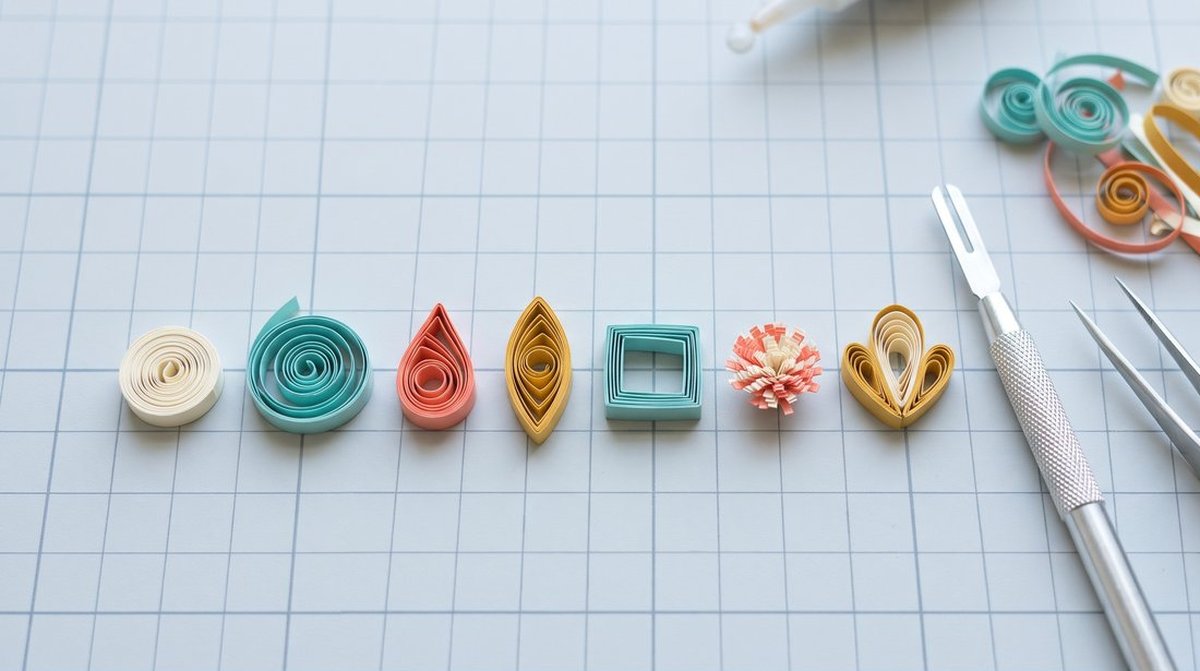
The table below summarises the techniques you will see most often on wholesale quilling cards. The descriptions follow standard craft instruction, such as the step-by-step shape guide published by the City of San Diego library programme.
| Technique | How it is made | Where it appears on cards | Relative hand time | Transit sensitivity |
|---|---|---|---|---|
| Tight coil | Strip rolled firmly and glued without loosening | Flower centres, berries, eyes on animals, dots in borders | Low | Very robust |
| Loose coil | Strip rolled, released so it opens, then glued at the tail | Base unit for most shaped petals and leaves; filler in backgrounds | Low | Robust |
| Teardrop | Loose coil pinched at one point | Petals, raindrops, flames, bird bodies | Low to medium | Robust |
| Marquise (eye) | Loose coil pinched at two opposite points | Leaves, lavender buds, wings | Low to medium | Robust |
| Square, diamond and triangle | Marquise rotated and pinched again to add corners | Geometric borders, gift-box motifs, stars | Medium | Corners can soften if pressed |
| Scrolls (open coils, S and C scrolls) | Strip curled at one or both ends and left open | Vines, swirls, hair, decorative frames | Medium | Most fragile; open ends can snag |
| Fringed flower | Strip cut into fine fringe, rolled, then fluffed open | Dandelions, daisies, chrysanthemums, pom-pom textures | Medium to high | Fringe can flatten under pressure |
| Husking | Strip wrapped around a row of pins to form loops of set length | Precise petals, sunflower and lavender stems, symmetrical motifs | High | Robust once glued |
Hand time is relative only; always ask for a sample and timeline for your own artwork.
Coils: the building block of almost everything
Every closed shape starts as a coil. The difference between a tight and a loose coil is simply whether the maker lets the roll relax before gluing the tail. Tight coils stay small and dense; loose coils open into a spiral that can be pinched into petals and leaves. Consistent spiral spacing across a card is one of the clearest signs of an experienced maker.
Pinched shapes: teardrops, marquises and geometric forms
Pinching a loose coil at one point gives a teardrop; pinching at two opposite points gives a marquise, often called an eye. Rotate a marquise and pinch again and you get squares and diamonds. These shapes do most of the visible work on floral cards. The skill to look for is matching: on a good card, the petals of one flower are close enough in size that the eye reads them as a single bloom.
Scrolls and open coils
Scrolls are strips curled at the ends but left open. They give a card movement and are common in vines, borders and lettering-style flourishes. They are also the element most likely to catch on a sleeve or bend in a badly stacked carton, so discuss packing for scroll-heavy designs at sample stage.
Fringed flowers
A fringed flower starts as a strip cut into very fine teeth along one edge, which is then rolled and spread open. The result is a soft, three-dimensional bloom that photographs well and is popular for daisies, dandelions and chrysanthemums. Fringed elements sit higher than the rest of the card, so check that the sleeve has been tested with the finished card.
Husking
Husking means wrapping a strip around a series of pins set out on a board, so that each loop has a controlled length. It produces crisp, symmetrical petals that are hard to achieve freehand. Because it is slower, husking is usually kept for premium designs where symmetry matters.
How do quilling techniques affect cost and lead time?
As a rule, the price and lead time of a quilling card follow the number of individual elements and the mix of techniques, not the physical size of the card. A large card with a few bold coils can be quicker to make than a small card covered in fringed flowers and husked petals. The main factors are:
- Element count: every coil, petal and leaf is rolled, shaped and glued by hand.
- Technique mix: fringing and husking add steps compared with simple coils and pinched shapes.
- Colour changes: each extra colour means more strips to prepare and more care to match the approved sample.
- Layering: elements stacked on top of each other need drying time between layers.
When you ask for a quotation, it helps to say whether you are open to small simplifications. Replacing a few husked petals with teardrops, for example, can keep a design close to the original look while making it easier to produce consistently. Our guide to sampling and golden-sample approval explains how to lock these choices before production starts.
Which quilling techniques suit which card designs?
Matching technique to motif is where a supplier’s experience shows:
- Floral everyday cards: teardrops and marquises for petals, tight coils for centres, scrolls for stems.
- Lavender, wheat and grasses: columns of small marquises or husked loops.
- Birds, owls and butterflies: graded teardrops for wings and feathers, tight coils for eyes.
- Wedding and anniversary cards: fringed flowers and husked petals for a premium, sculpted look.
- Corporate and logo cards: geometric shapes and controlled scrolls, kept simple so the logo stays legible.
Symbolism matters as much as technique for many buyers. If you are building a floral range, our flower meanings guide for greeting cards covers which blooms suit which occasions in different markets.
How to brief a supplier on quilling techniques
A clear brief saves at least one round of samples. Before you send artwork, check that it answers these questions:
| Brief item | What to specify | Why it matters |
|---|---|---|
| Reference design | Sketch, photo or existing card, with the motif clearly marked | Avoids guesswork about which elements are quilled |
| Key techniques | Name the shapes you expect, for example fringed centre, husked petals | Lets the workshop quote the right hand time |
| Colour references | Colour codes or physical swatches for each element | Paper strips must be matched before production |
| Element density | Whether the design can be simplified slightly | Gives room to balance cost and look |
| Card format and sleeve | Card size, fold, envelope and retail sleeve | Raised elements need tested clearance |
| Branding | Logo or message to print, and where | Keeps printed areas clear of glued elements |
| Packaging and shipping | Retail pack, inner box and carton plan | Protects scrolls and fringed elements in transit |
Our handmade quilling cards are made at a partner workshop by skilled artisans, mostly women from the local area, and every order follows a four-step check: sample approval before production, a mid-production check at the workshop, inspection of every card before packing, and a carton count with photos and video sent to you before shipment. You can see the card range on our handmade greeting cards page, and our post on quality control for quilling cards goes deeper into what to inspect.
How to judge quilling technique in a sample
Look at the sample in daylight and at an angle, not just from the front. Good technique shows in small details:
- Coils of the same type are a consistent size across the card.
- Pinched points are sharp and centred, not off to one side.
- No glue is visible on the surface or around the base of elements.
- Fringed flowers are evenly opened with no torn teeth.
- Raised elements are firmly attached; a gentle tilt of the card should not move them.
The Victoria and Albert Museum holds a Victorian quilling kit from around the 1880s whose maker promoted the craft for results that looked like jewels. That jewelled effect is still what you are paying for: precise, consistent shapes that catch the light.
Frequently Asked Questions
What is the most common quilling technique on greeting cards?
The loose coil and its pinched variations, the teardrop and the marquise, appear on almost every quilling card. They form petals, leaves and wings. Tight coils are the next most common, usually as flower centres and accents.
Does husking make a quilling card more expensive?
Usually yes, because husking takes more precise hand work than simple coils. The overall effect on price depends on how many husked elements a design uses.
Which quilling elements are most fragile in shipping?
Long open scrolls and fringed flowers are the most sensitive to pressure and snagging. Tight coils and closed pinched shapes are far more robust. Plan packing around the most fragile element in the design.
Can a supplier copy my existing card design using different techniques?
Yes, a workshop can interpret your artwork with the techniques that suit it best, as long as you own or have rights to the design. Agree on the approved sample before production so that the technique choices are fixed for the whole order.
How do I ask for a quotation on a custom quilling design?
Send your reference artwork, the techniques you expect, colours, card format, packaging and destination. The more specific the brief, the more accurate the quotation. We reply within one business day.
Ready to brief your next quilling card range?
If you already know the motifs and techniques you want, or need help translating a design idea into a workable quilling brief, send us the details through our Request a Quote page. We will come back within one business day with questions, sampling options and a quotation for your range.