
Wooden Bowls from Vietnam: The Houseware SKU That Earns Its Place in Every Container
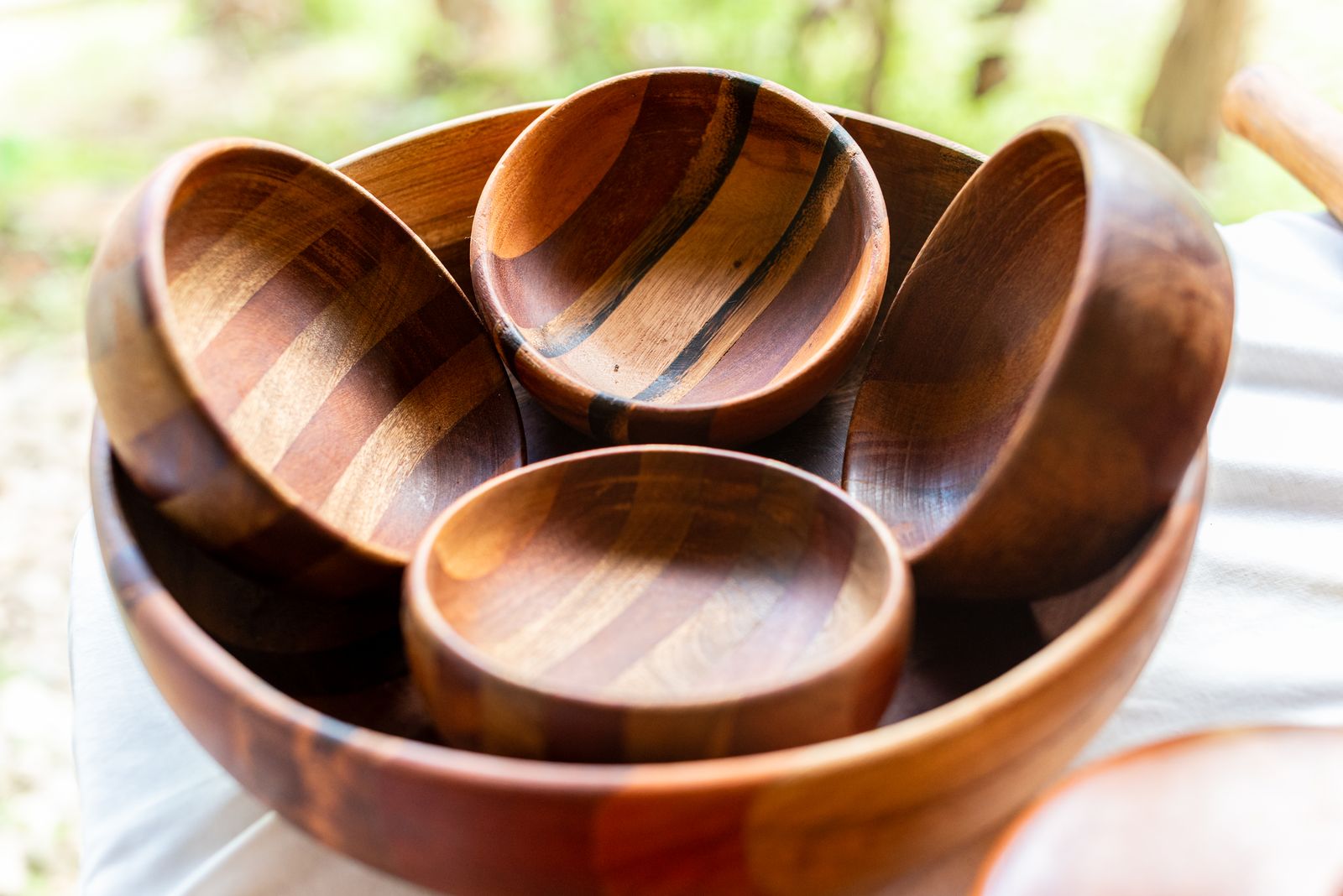
Wooden bowls sit in an unusual commercial position. They are bought as kitchenware, displayed as houseware, gifted as home decor and photographed as props — which means a single well-chosen SKU can be sold through four different retail channels without new tooling. For importers building a wooden houseware programme in 2026, bowls deliver a higher retail markup than utensils and a lower breakage rate than ceramic, while shipping in nested stacks that use container space efficiently.
This guide covers what wholesale buyers actually need to specify when sourcing wooden bowls and wooden tableware from Vietnam: the SKU range, wood species economics, construction methods, food-contact finishes, moisture control, indicative FOB pricing, certification paperwork and private-label options.
Why Vietnam for Wooden Bowls in 2026
Vietnam has built a wood-processing cluster that few competing origins can match on cost and depth. Plantation acacia and rubberwood are grown domestically, cut domestically and finished domestically, so buyers are not paying for imported raw material inside a finished bowl. Binh Duong, Dong Nai and Ho Chi Minh City host the CNC turning, sanding and finishing capacity, while the ports at Cat Lai and Cai Mep handle export volume without the inland trucking premium that landlocked origins carry.
The trade environment reinforces this. The Vietnam-UAE CEPA signed in February 2026 reduces duty exposure for Gulf importers, RCEP covers most Asian buyers, and Vietnamese goods currently face a 20 percent US tariff line against 100 percent-plus on comparable Chinese origin. For a category where landed cost decides shelf price, that gap is the whole argument.
The Core Wooden Bowl and Tableware SKU Range
- Salad and serving bowls — 20 to 30 cm diameter, the anchor SKU for retail sets and HORECA buffet lines.
- Nested snack and side bowls — 9 to 15 cm, sold in sets of three to six; the highest units-per-carton of any wooden houseware item.
- Footed and pedestal bowls — raised base, strong gifting and display margin, popular for Ramadan and year-end retail programmes.
- Shallow wooden plates and dinner plates — 20 to 28 cm, pairs with bowls to complete a tableware set.
- Poke, ramen and pasta bowls — deeper profile aimed at HORECA and food-photography buyers.
- Dough, mixing and salad-tossing bowls — thicker wall, priced by weight rather than diameter.
- Condiment and dip bowls — 6 to 8 cm, usually sold as add-on multipacks with a serving board.
Most buyers open with a mixed set rather than a single diameter. A three-piece nested set plus one large serving bowl covers the widest retail price band and lets you test which size sells before committing to a single-SKU mould run. If you are also carrying wooden serving and charcuterie boards or wooden kitchen utensils, bowls complete the merchandising story on the same shelf.
Wood Species: What Each One Costs and Where It Fits
Acacia is the default for export bowls. Plantation-grown, FSC-certifiable, dense enough to hold an edge-glued joint and figured enough that no two bowls look identical — which retail buyers treat as a feature. It takes a food-safe oil finish cleanly and photographs well under warm store lighting.
Rubberwood is the value tier. Pale, uniform grain from retired latex plantations, roughly 15 to 25 percent cheaper than acacia at the same diameter. It suits stained or painted finishes and price-led retail programmes, but it is more sensitive to moisture swings and needs tighter kiln control.
Mango wood and walnut-stained acacia occupy the premium end. Mango carries a darker, more dramatic figure that sells into home-decor and gifting channels; walnut staining lets a buyer hit a premium colour target at acacia cost. Expect a 20 to 35 percent price step over natural acacia.
Whichever species you choose, ask for the plantation source in writing. Buyers shipping into the European Union should confirm the supplier can support EU Deforestation Regulation due-diligence data, and buyers with retail chain requirements should ask whether the factory holds FSC chain-of-custody certification rather than assuming it.
Construction Methods You Must Specify
- Solid-turned from a single block — no visible joints, strongest premium look, highest material waste and therefore highest price. Best for large serving bowls above 25 cm.
- Edge-glued blank, then turned — laminated staves turned into a bowl. Visible stripe pattern, excellent dimensional stability, 20 to 30 percent cheaper than solid. The commercial standard for most export SKUs.
- Finger-jointed blank — lowest cost, more visible joint lines. Acceptable for painted or heavily stained finishes, risky for natural-oil finishes where every joint shows.
- CNC-carved from board stock — used for shallow plates, oval platters and irregular organic shapes rather than deep bowls.
The single most common quality dispute in this category is glue-line failure after the goods reach a dry or humid market. Specify a D3 or D4 water-resistant, food-contact-approved adhesive and put it on the purchase order — not in an email thread.
Finishes, Food-Contact Safety and Moisture Control
Export bowls are normally finished with food-grade mineral oil, a natural oil-and-beeswax blend, or a food-contact lacquer. Oil finishes give the matte, tactile look that sells at premium retail but need reapplication by the end user; lacquer is more durable for HORECA service but must carry documented food-contact compliance. Ask which standard the supplier is testing against — EU Regulation 1935/2004 and 10/2011, US FDA 21 CFR, or the destination-market equivalent — and get the test report, not a verbal assurance.
Moisture content is the other technical control that decides whether your container arrives sound. Target 8 to 12 percent for most destinations, closer to 6 to 8 percent for dry Gulf and desert-climate markets. Above 14 percent, bowls will check and crack weeks after arrival, long after the inspection has been signed off. Insist on a moisture meter reading on the pre-shipment inspection report for every production lot.
Indicative FOB Pricing and MOQ
- Condiment or dip bowl, 6 to 8 cm acacia — approximately USD 0.55 to 1.10 per piece.
- Nested snack bowl, 12 cm acacia — approximately USD 1.60 to 2.90 per piece.
- Shallow wooden plate, 22 to 25 cm — approximately USD 2.80 to 4.60 per piece.
- Salad or serving bowl, 25 to 30 cm edge-glued acacia — approximately USD 4.50 to 8.50 per piece.
- Solid-turned large serving bowl, 30 cm — approximately USD 9.00 to 16.00 per piece.
- Footed or pedestal bowl with premium stain — approximately USD 6.00 to 12.00 per piece.
Typical MOQ runs 500 to 1,000 pieces per SKU per size for stock designs, and 2,000 to 3,000 pieces where a custom profile, custom stain or bespoke laser engraving is involved. Figures are FOB Ho Chi Minh City and move with species, diameter, wall thickness, finish, packaging and order volume. Treat them as a planning range for budgeting, then confirm against a formal quotation.
Certifications and Documents to Collect Before You Pay
- Food-contact migration test report for the finish, referenced to your destination market standard.
- FSC chain-of-custody certificate if your retail customer requires certified timber.
- Phytosanitary certificate and, where required, ISPM 15 treatment records for wooden packaging.
- Moisture content report per production lot, with the meter reading and sampling method stated.
- Certificate of Origin — Form AANZ, Form E, Form D or the CEPA form relevant to your route, issued against the correct HS code.
- BSCI, Sedex or SMETA social-audit report where your buyer runs a supplier code of conduct.
- Factory ISO 9001 certificate and a recent third-party inspection report.
If the supplier cannot produce these before shipment, the documents do not exist. Ask at quotation stage, not at loading stage. The same discipline applies across every category we cover, from acacia kitchenware to bamboo houseware.
Packaging and Container Loading
Bowls are one of the few wooden houseware items that nest, and that changes your freight maths completely. A set of six 12 cm bowls nested occupies roughly the volume of two unnested pieces. Specify nesting tolerance on the drawing and you can lift units per 20ft container by 30 to 40 percent against a flat-packed equivalent.
For retail-ready programmes, request individual kraft sleeves or printed belly bands with your barcode, then master cartons of 12 to 24 sets with corner protection. For HORECA volume, bulk pack in polybags with silica gel and interleaving paper. Either way, confirm carton burst strength and demand a carton drop test before the first full container — inland transit in the destination market does more damage to wooden bowls than the ocean leg.
OEM and Private-Label Options
- Laser engraving of your logo on the base or rim — the lowest-cost branding, no tooling charge.
- Custom stain and finish matched to a physical colour swatch you supply.
- Custom bowl profile, wall thickness and diameter to your technical drawing.
- Printed kraft sleeve, belly band, gift box or hangtag with your barcode and care instructions.
- Mixed-SKU retail sets bundled and barcoded at the factory, ready for shelf.
- Branded care card and multilingual food-safety insert for regulated markets.
Five Mistakes That Cost Importers Money
- Approving a sample without a moisture reading. The sample was fine; the container was kiln-dried in a different week.
- Leaving adhesive grade unspecified. Glue-line failure is invisible at inspection and obvious at the customer.
- Ordering one diameter only. You lose the nesting advantage and learn nothing about which size sells.
- Assuming natural grain variation is a defect. Agree an acceptable grain and colour range against physical limit samples, or every inspection becomes an argument.
- Buying on unit price alone. A bowl that is 40 cents cheaper and 200 grams heavier can cost more per container than the premium option.
A Practical First-Order Checklist
- Shortlist three to five SKUs across two diameters rather than committing to one size.
- Request paid samples in your chosen species and finish, and keep one sealed as your reference limit sample.
- Confirm species, construction method, adhesive grade, finish standard and target moisture content in writing on the purchase order.
- Collect the food-contact test report, origin documents and any FSC or social-audit certificates before issuing payment.
- Place a mixed 20ft trial container rather than a single-SKU commitment.
- Book third-party pre-shipment inspection covering moisture content, glue lines, finish uniformity and carton count.
- Scale to full volume and custom branding once the trial clears inspection and sells through.
Working with Viet Farm Vision
Viet Farm Vision supplies wooden bowls, wooden tableware and the wider wooden kitchenware and houseware range to wholesale, retail and HORECA buyers across the Middle East, Asia, Europe and Africa. We handle SKU selection, species and finish specification, food-contact documentation, private-label packaging and export paperwork from a single point of contact — including moisture verification and glue-line checks on the pre-shipment inspection report for every order.
To request a quotation, a product catalogue or paid samples, contact our export team at info@vietfarmvision.com or visit vietfarmvision.com/contact-us.