
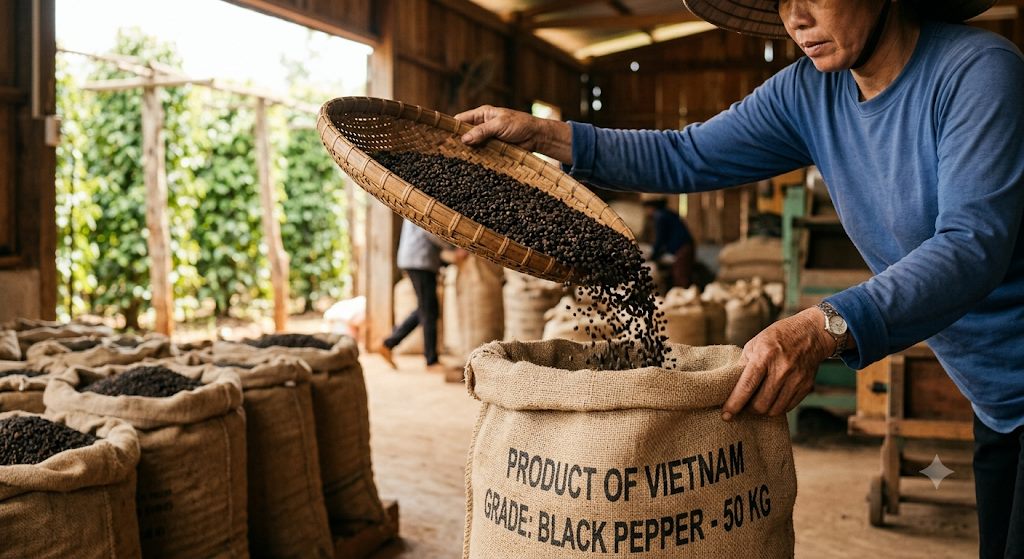
Vietnam grows roughly a third of the world’s pepper and now supplies more than half of global pepper exports, making it the single most important sourcing origin for spice importers, food manufacturers, and private-label brands anywhere in the world. In the first quarter of 2026 alone, Vietnamese exporters shipped tens of thousands of tons of pepper worth over $300 million, and prices have stayed firm as global buyers compete for reliable supply.
In short: Vietnam supplies more than half of global black pepper exports, making it the single most important sourcing origin for the spice trade. B2B buyers typically order FAQ (Fair Average Quality) or MC (Machine Cleaned) grades, and shipments should carry FTA certificates where applicable (EUR.1, CPTPP or RCEP forms) plus pesticide residue and heavy metal test reports – especially for EU-bound cargo.
If your business imports whole or ground black pepper, for retail, foodservice, or industrial food processing, here is what you need to know before placing your first purchase order.
Why Global Buyers Source Pepper From Vietnam
Vietnam’s pepper advantage comes down to three things: scale, processing infrastructure, and price. Decades of concentrated cultivation in the Central Highlands (Dak Lak, Gia Lai, Dong Nai) and the southeastern provinces have built a supply base large enough to fill container-scale orders consistently, year after year, at prices that are typically more competitive than Indian or Brazilian origin.
On top of raw supply, Vietnam has also built the processing capacity international buyers actually need, including steam sterilization, density sorting, and ASTA-grade cleaning lines, so buyers can order specification-matched pepper rather than raw farm-gate product that still needs reprocessing at destination.
What B2B Buyers Typically Order
- FAQ (Fair Average Quality) black pepper: the standard commodity grade, commonly used for bulk grinding and industrial food processing
- MC (Machine Cleaned) pepper: mechanically cleaned to remove light berries, dust, and foreign matter
- ASTA 500 and ASTA 550+ grades: high-density, steam-sterilized pepper for the US and European retail and foodservice markets, where density and cleanliness specifications are strictly enforced
- White pepper: decorticated black peppercorns, popular with sauce, seasoning blend, and light-colored food manufacturers
- Custom grinds and packaging: pre-ground pepper, private-label retail pouches, and bulk export bags packed to the buyer’s specification
Many importers start with a single FAQ or ASTA 550 order to test quality consistency, then move to a standing contract once the supplier has proven reliable across two or three shipments.
MOQ, Pricing & Lead Time
Pepper is a bulk commodity crop, so most exporters set MOQs at a full container load, roughly 17 to 19 metric tons for a 20ft container, though some trading houses will consolidate smaller orders of 5 to 10 tons for new buyers. FOB prices move with the global commodity market, so expect your supplier to quote against the current market reference rather than a fixed catalog price. Lead time from confirmed order to vessel departure typically runs 2 to 4 weeks, depending on port congestion and whether the pepper needs additional cleaning or steam sterilization before loading.
Because pepper is price-sensitive and volatile, buyers should lock in specifications such as grade, moisture content, and density in the contract before shipment, not negotiate them after the container has already sailed.
Certifications & Compliance Buyers Should Verify
Before confirming a purchase order, international buyers should request:
- Phytosanitary certificate issued by Vietnam’s Plant Protection Department
- Certificate of Origin (e.g. EUR.1 for the EU, or relevant FTA certificates for CPTPP/RCEP markets) for preferential tariff treatment where applicable
- Pesticide residue and heavy metal test reports, particularly for shipments bound for the EU, which enforces strict MRL (Maximum Residue Limit) standards
- Steam sterilization certification, if the pepper is intended for retail or ready-to-eat applications
- HACCP or ISO 22000 certification from the processing facility
Buyers shipping to the EU in particular should confirm residue testing is current. MRL enforcement has tightened in recent years, and a shipment that fails testing at the port of entry is a far costlier problem than a slightly higher quote upfront.
Working With a Sourcing Partner vs. a Single Exporter
Pepper pricing swings with the global commodity market, and quality can vary meaningfully between farm-gate lots even within the same region. Buyers who work directly with a single small exporter often find their contracted grade and spec harder to guarantee across repeat shipments. A sourcing partner who blends and grades pepper across multiple validated farm sources, tests each lot before loading, and manages export documentation gives buyers more consistent quality and more negotiating leverage on price.
Viet Farm Vision works with vetted pepper processors across Vietnam’s Central Highlands and southeastern growing regions to manage grading, steam sterilization, lab testing, and consolidated export shipping for spice importers, food manufacturers, and private-label brands worldwide.
Looking to add reliable, specification-matched Vietnamese pepper to your supply chain? Get in touch with our team to discuss your grade requirements, volume, and timeline.
Frequently Asked Questions
How much of the world black pepper comes from Vietnam?
Vietnam supplies more than half of global pepper exports, making it the dominant origin for spice importers, food manufacturers and grinders worldwide.
What black pepper grades do B2B buyers order?
FAQ (Fair Average Quality) as the standard commodity grade for bulk grinding and industrial processing, and MC (Machine Cleaned) pepper for higher cleanliness specifications.
What documents should accompany a pepper shipment?
Certificate of origin (EUR.1 for the EU or relevant FTA certificates for CPTPP/RCEP markets where preferential rates apply), plus pesticide residue and heavy metal test reports – the EU applies particularly strict limits.
Why is testing so important for pepper?
Pesticide residues and heavy metals are the leading causes of border rejections for spices – lot-specific certificates of analysis from accredited labs protect both compliance and brand.