
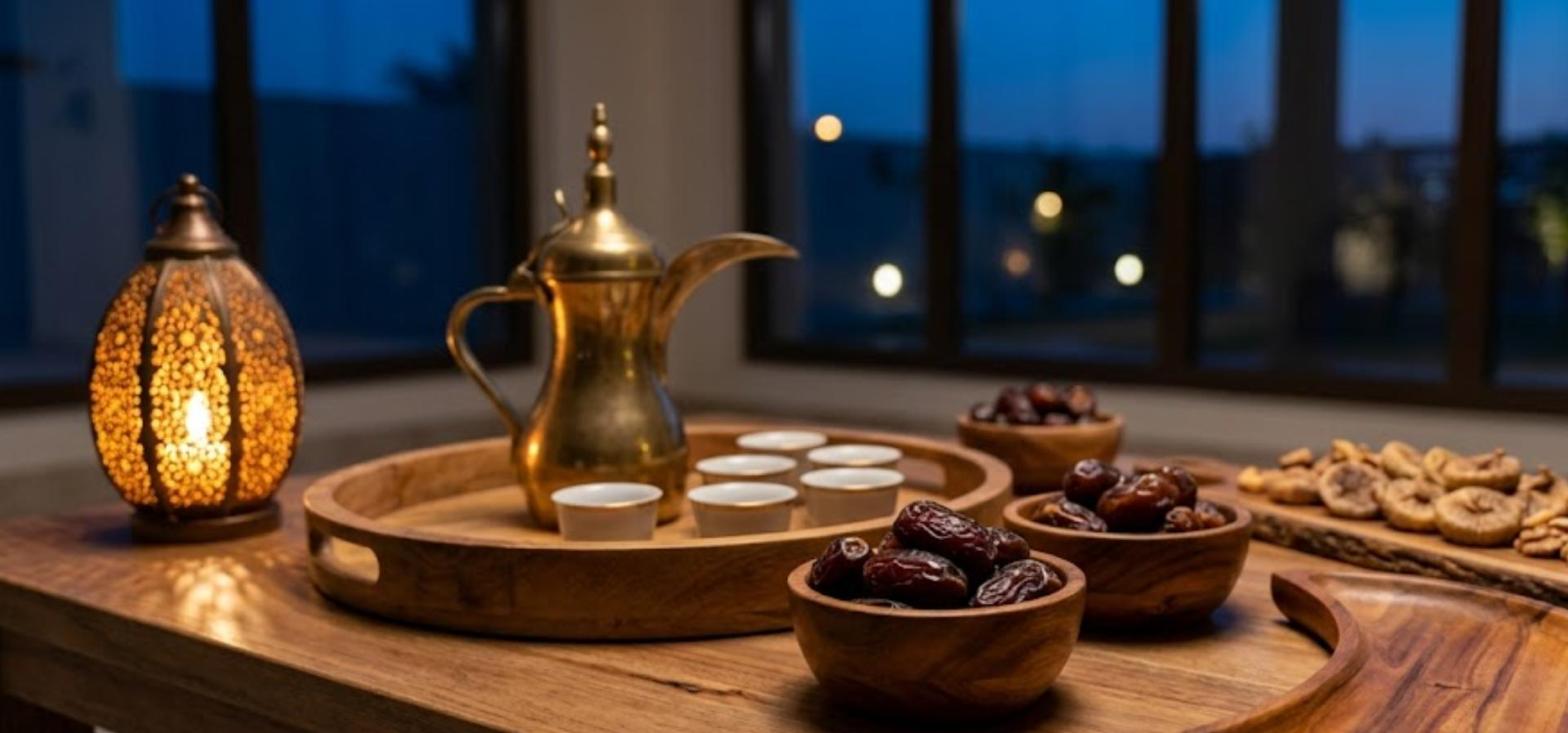
Every year, homeware buyers in Dubai, Riyadh, Doha and Kuwait City run the same seasonal play. Wooden date bowls, serving trays for Arabic coffee, large sharing platters for iftar and boxed gift sets go on display a few weeks before Ramadan, sell hard for a month, and then carry through to Eid. In 2027 that routine meets a calendar problem that most range plans have not priced in yet.
Ramadan 2027 is expected to begin around 8 February, subject to moon sighting. Tet, the Lunar New Year and the longest holiday in Vietnam, falls on 6 February 2027. The two dates sit two days apart. For importers of Vietnam wooden serveware, that means the last practical production window for Ramadan stock closes in December 2026, not in January, and the purchase order has to be placed within the next few weeks.
Why the 2027 calendar is different for Gulf buyers
In a normal year, a Ramadan range can be produced in January and shipped straight after Tet. In 2027 there is no “after Tet” for Ramadan. Vietnamese wood workshops slow down in the second half of January as workers travel home, close for roughly one to two weeks around Tet, and take another week or two to return to full output. Anything not finished, inspected and loaded before that slowdown will arrive in the Gulf when Ramadan is already under way.
Working backwards from a typical Gulf retail setup gives a simple timeline. Port to port, a container from Cat Lai in Ho Chi Minh City to Jebel Ali usually takes around two to three weeks, plus customs clearance and distribution centre time at destination. Retailers that want stock in store by mid January therefore need goods on the water by around the third week of December.
- By early November 2026: assortment fixed, samples approved, purchase order and deposit confirmed.
- November to mid December: production, including drying checks, turning, sanding, finishing and packing.
- Mid to late December: pre shipment inspection and container loading at Cat Lai.
- Early January 2027: arrival at Jebel Ali, Dammam or Jeddah, then clearance and distribution.
- Mid January: in store for the Ramadan setup, with Ramadan expected from around 8 February and Eid al Fitr expected around 9 to 10 March.
Orders that miss this window are not lost, but they change purpose. Production restarting in late February is well placed for Eid al Adha, expected around mid May 2027, and for the summer hospitality season. Our earlier guide on booking capacity before Tet 2027 explains how workshops allocate their pre Tet slots.
The Ramadan and Eid assortment that actually turns
Gulf buyers who run this season every year tend to concentrate on a short list of wooden pieces. They are bought for the iftar table, for hosting during the month and for gifting at Eid, so the range should be built around use, not around a catalogue.
- Date bowls and lidded date boxes: turned acacia or mango wood bowls from 12 to 20 centimetres, and lidded boxes for gifting. Small, giftable, high repeat rate.
- Serving trays with handles: round and rectangular trays for Arabic coffee and tea service, usually 35 to 50 centimetres, with cut out handles or brass tone metal handles.
- Large sharing platters: 50 to 70 centimetre boards and platters for family iftar, including live edge and crescent shaped designs that sell as seasonal statement pieces.
- Nested bowl sets and lazy Susans: practical pieces for the large shared table, often sold in sets of three.
- Boxed gift sets: a board, a bowl and a small serving spoon in a gift box, aimed at corporate Ramadan hampers and Eid gifting.
For the broader serving board category, our guide to wooden serving and charcuterie boards from Vietnam covers sizes, species and pricing logic in more detail.
Specifications that matter in a Gulf home
Serveware made in a humid Vietnamese workshop and used in an air conditioned Gulf home crosses one of the widest humidity gaps in the trade. Indoor air in the Gulf in winter can be very dry, and wood that leaves the factory too wet will shrink, check or warp on the shelf or in the customer’s home. Three specification lines prevent most seasonal returns.
- Moisture content at loading: state a target range, typically 8 to 10 percent for acacia and mango wood bound for dry interiors, and ask for meter readings in the inspection report.
- Finish matched to the product: date bowls and platters that touch food need a food safe oil or oil and wax finish with a food contact declaration. Decorative trays can take a sealed lacquer that resists sticky date syrup and coffee rings.
- Construction for large pieces: wide platters and trays should specify solid or edge grain construction, grain direction and minimum thickness, so that a 60 centimetre piece does not cup in its first month.
Our earlier articles on moisture content and food safe finishes and on board construction give the full technical background.
Packaging and presentation for a gifting season
During Ramadan and Eid a large share of wooden serveware is bought as a gift, so the packaging carries part of the price. Buyers usually specify gift boxes or window sleeves in seasonal colours, bilingual Arabic and English labelling where the destination market requires it, and a care card explaining how to oil and clean the piece. Gift sets should be drop tested in their retail box, not only in the master carton.
Branding the wood itself with a laser engraved logo or a seasonal pattern is a low cost way to make a standard tray exclusive to one retailer. The options are explained in our guide to private label branding on wooden kitchenware, and carton and sleeve specs in packaging engineering for wooden kitchenware.
Commercial levers for UAE and GCC importers
Two levers help Gulf buyers protect margin on a short season. The first is tariff: UAE importers should check how the Vietnam UAE CEPA applies to their HS codes and what certificate of origin is required. The second is freight: seasonal serveware is bulky and light, so combining bowls, trays and boards in one mixed container, and nesting items properly, often matters more to landed cost than the unit price. Our note on container loading and cube efficiency shows how to calculate it.
The checklist to send your supplier this week
- Final assortment with drawings or reference photos, sizes and wood species for each item.
- Target quantities per item and colour, with the minimum per design confirmed.
- Finish per item: food contact oil, oil and wax, or lacquer, and the declaration required.
- Moisture content target at loading and how it will be measured.
- Gift box, sleeve or label artwork, including Arabic text checked by a native speaker.
- Carton specs, nesting plan and target container mix.
- Latest acceptable loading date, and the inspection date before it.
- Port of discharge and the documents required, including certificate of origin.
If those eight points are agreed by early November, a Ramadan 2027 program can be produced and shipped before Tet with a comfortable buffer. If they are still open in December, the safest plan is to move the range to Eid al Adha and the summer season rather than force a rushed production.
How Viet Farm Vision supports seasonal serveware programs
Viet Farm Vision works as a manufacturing network and export partner for wooden kitchenware and houseware made in Vietnam. For seasonal programs we confirm a loading date with the workshop before the quotation is accepted, build the moisture and finish requirements into the purchase order, and schedule inspection early enough to correct problems without missing the vessel.
Buyers in the UAE, Saudi Arabia and the wider GCC who are planning Ramadan and Eid 2027 serveware can send their assortment, target quantities and destination port to info@vietfarmvision.com. A first reply with production slot availability and indicative pricing usually follows within two working days.