
Custom event apparel for marathons works best when you decide the garment role first (finisher shirt, volunteer polo, staff hoodie), then work backwards from race day. Most delays come from late artwork, unclear size splits and missing sample approval, not from sewing itself. This guide walks event organisers, including United States race directors, through the choices that matter.
What Apparel Does a Marathon or Event Actually Need?
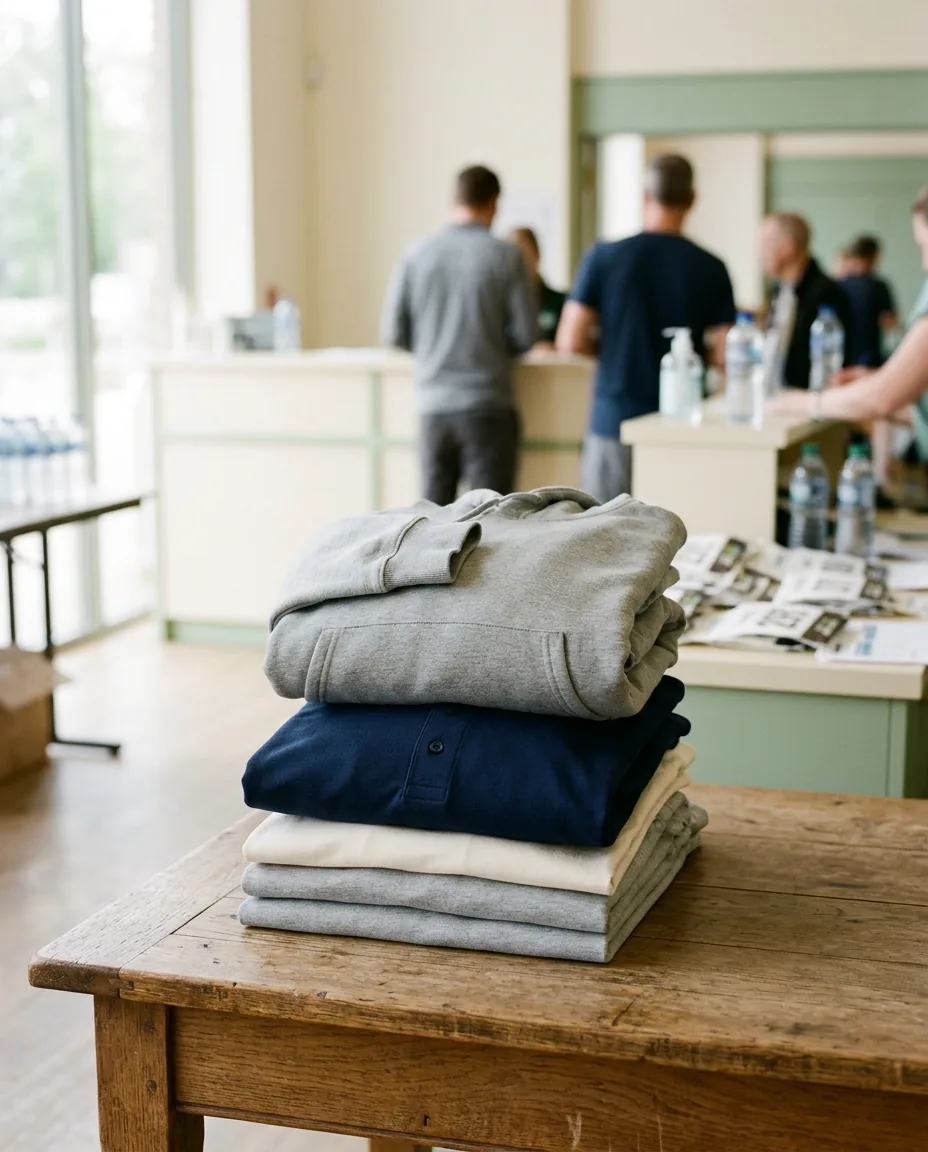
Most races use several garment types, each with a different job. Treating them as one order often leads to the wrong fabric in the wrong place, or a budget spent on the wrong item. Each piece has its own audience, its own wear time and its own risk if it goes wrong.
- Participant or finisher T-shirts: the most visible item, usually a soft cotton or blended jersey tee that runners will wear again after the event.
- Volunteer and marshal shirts: bright, easy to spot, and comfortable for hours outdoors in changing weather.
- Staff and sponsor polos: a neater look for registration desks, VIP areas and press zones.
- Hoodies and sweatshirts: early morning start lines, finisher gifts, or merchandise sold at the expo.
Our custom garments range covers these categories through vetted partner factories, so one supplier conversation can cover the whole kit instead of three separate projects.
Which Garment Suits Which Role?
Think about who wears it, for how long and in what weather. The table below is a starting point, not a rule.
| Role | Suggested garment | Why |
|---|---|---|
| Finisher or participant | T-shirt | Light, easy to size, good print area |
| Volunteers | T-shirt in a high-visibility colour | Easy to identify in a crowd |
| Staff, sponsors, VIP | Polo shirt | Smart, suits embroidered logos |
| Expo merchandise, cold starts | Hoodie or sweatshirt | Higher perceived value, works as a keepsake |
For a deeper look at polo fabrics, see our comparison of piqué vs jersey polo shirts. Details on custom T-shirts and custom polo shirts are on their product pages.
Think about the day, not only the product
A shirt worn at a 6 a.m. start in autumn is a different brief from a shirt worn at a July charity fun run. Ask yourself whether volunteers will stand still for hours or move constantly, whether sponsors will be photographed in their polos, and whether finishers will wear the tee on the course or only afterwards. These small questions shape fabric, colour and fit more than any catalogue does.
Colour choices that work outdoors
Bright colours help volunteers stand out, but very light colours show sweat and dirt, and very dark colours can feel hot in summer sun. Pick one main event colour, one neutral for staff, and keep sponsor logos legible on both. Ask for a physical colour reference if your brand colour matters, since screens rarely show shades accurately.
How Should You Plan Sizes for Runners?
Sizing is where race organisers lose the most money. Registration data is your best tool. If your sign-up form asks for a shirt size, use those real numbers instead of a generic split.
Use registration data, not guesses
Collect size choices at sign-up and set a cut-off date for changes. Late changes force reorders that cost more and arrive after the event. If your race has several distances, look at the split by distance too, because a half marathon crowd and a charity walk crowd often order differently.
Consider fit and gender cuts
Many running events offer a unisex cut and a women’s cut. If you only offer one, say so clearly on the registration page to avoid complaints at the expo. A short size chart with chest measurements helps people choose correctly and reduces swap requests on race morning.
Keep a small buffer
Add a modest reserve for walk-up registrations, sponsors and replacements. Agree the buffer with your supplier early. Small first orders are welcome with us, so you can test a size split before scaling up a repeat race. Record what sold out and what was left over, and use that data to refine next year’s order.
Print or Embroidery for Event Garments?
Screen printing suits large, bold designs on tees and is common for participant shirts. Embroidery suits polos and hoodies where you want a premium finish, such as staff and sponsor wear. Complex multi-colour artwork or event dates may be better printed. Our guide on screen printing vs embroidery explains the trade-offs in detail.
Practical tips for race shirts:
- Keep the design readable at a distance, since photos will be taken on the course.
- Limit the number of colours to keep production simple and consistent.
- Place sponsor logos where they will show up in finish line photos.
- Leave the event year or date off the main design if you hope to reuse leftover stock next season.
- Ask for a physical sample before approving the full run.
What Should You Send a Supplier to Get an Accurate Quote?
A clear brief saves days of back and forth. Prepare the following before you request a quote:
- Garment type, colour and preferred fabric feel
- Vector artwork and logo placement (front, back, sleeve)
- Size breakdown from your registration data
- Decoration method (print or embroidery)
- Packing needs, such as individually bagged or bundled by size
- Your event date and delivery address
A proper specification sheet helps even more. Our article on the tech pack for custom T-shirts shows what to include.
How Early Should Organisers Start Sourcing?
Start well before your registration closes, and never wait for the final headcount to begin artwork and sampling. A sensible order of work is: confirm the garment list, finalise artwork, approve a sample, lock sizes, then place the production order. We do not promise fixed lead times, because they depend on the garment, decoration and the partner factory schedule, so build in generous margin around your race date and shipping.
For international orders into the United States, duties and import rules can change. Check current requirements with your customs broker, and see the official U.S. Customs and Border Protection trade pages for general guidance.
Build a simple working timeline
Work backwards from the day kits must be in your hands, not the day of the race. Leave time for sample review, possible corrections, production, packing, shipping and customs clearance, then add a final week for sorting and bagging by size before the expo. Many organisers also keep a small decision calendar so sponsors, designers and the race committee all know when artwork is locked.
How Do You Keep Quality Consistent Across a Large Run?
Approve one signed-off sample and treat it as the reference for the whole run. Agree on colour, print position, stitch quality and label placement in writing. Ask for photos during production and before packing. For multiple sizes, check that the print placement is scaled sensibly, since a logo that looks right on a medium can sit too low on a 3XL.
On arrival, open a few cartons from different sizes and check them against the approved sample before you start sorting. If something is wrong, you want to know days before the expo, not on race morning. Keep photos of any issue so the conversation with your supplier stays factual and quick.
Frequently Asked Questions
Can I order a mix of T-shirts, polos and hoodies in one project?
Yes. Many organisers combine participant tees, staff polos and merchandise hoodies. Sharing artwork across items can simplify the brief and keep branding consistent.
Can I order small quantities for a first race?
Small first orders are welcome. Share your expected headcount and we can discuss what is practical for your event.
Do you work with logos and sponsor artwork?
Yes, as long as you supply artwork and have the right to use it. Vector files give the cleanest results for both print and embroidery.
Should I approve a sample before the full run?
Yes. A sample lets you check colour, fit, print size and placement before committing to every size. It is the cheapest way to avoid problems.
Who handles import and duties?
Import rules and duties vary by country and by product, so we do not give legal advice on them. Confirm the details with your customs broker, and see the U.S. Customs and Border Protection trade pages for general guidance on US imports.
Ready to Plan Your Race Kit?
Tell us about your event, garment list and size split, and we will help you shape a clear brief. Request a quote to start the conversation, or browse our custom hoodies and sweatshirts for cooler race days.