
Piqué vs jersey polo shirts comes down to texture, breathability and the look you want: piqué is a textured, slightly open knit that breathes well and holds a crisp, classic shape, while jersey is a smooth, flat knit that drapes softly and feels closer to a premium T-shirt. For uniforms and hot-weather wear, piqué is usually the safer default; for lifestyle collections and printed designs, jersey often wins.
Below we break down how each knit is built, how they behave in daily wear, how logos sit on each surface, and how to specify the fabric clearly when you brief a sample. It is the same conversation we have with buyers before we pass an order to our partner sewing workshops in Vietnam.
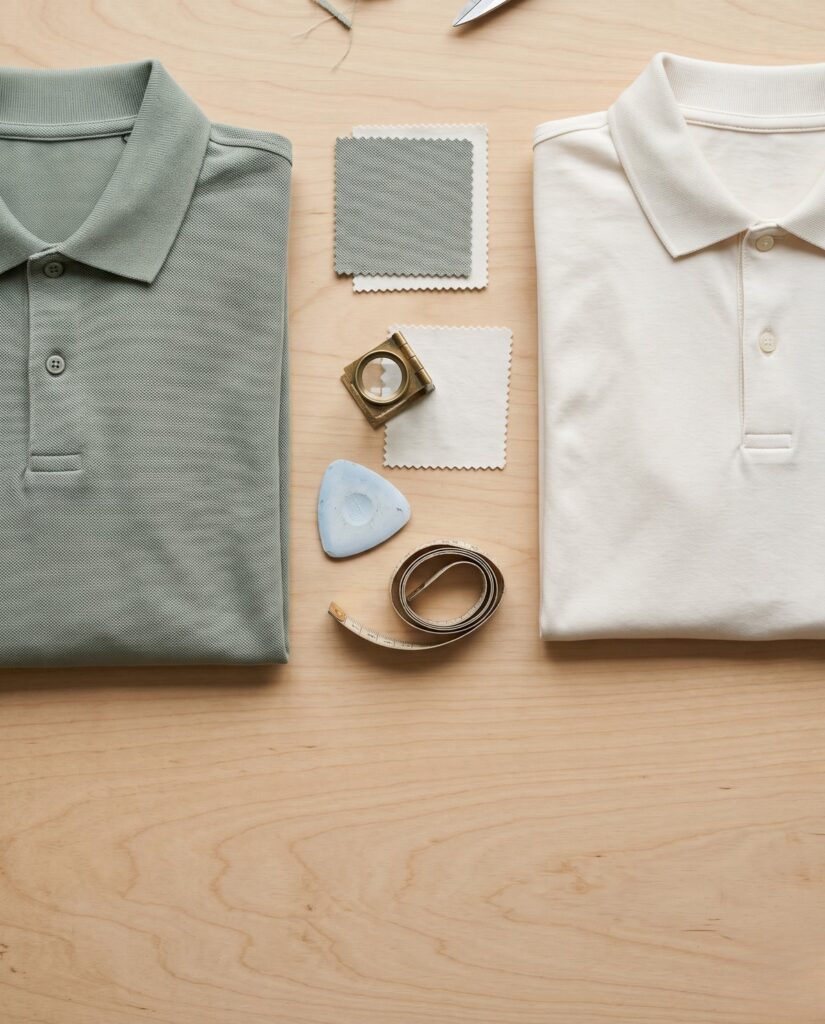
What is the difference between piqué and jersey polo shirts?
Both piqué and jersey are weft knits, which means the fabric is built from loops of yarn running across the width of the cloth. That is why both stretch and recover better than woven shirting. The difference is in the stitch structure, and that structure changes almost everything a wearer notices: surface, airflow, weight in the hand and how the collar and placket behave. Cotton Incorporated’s knit basics guide is a good primer if your team wants the technical background.
How piqué knit is built
Piqué combines regular knit stitches with tuck stitches, creating a raised pattern of small cells, often described as a honeycomb or waffle texture. The term was borrowed from a woven fabric with raised cords (see piqué in weaving), and in knitwear it now refers to this textured surface. Common variations include single piqué and double piqué, which differ in how pronounced the texture is and how firm the fabric feels.
How jersey knit is built
Single jersey uses plain knit stitches only, so the face is smooth with fine vertical lines and the back shows small loops. It is the fabric most people know from T-shirts. A jersey polo keeps the collar, placket and buttons of a polo, but the body feels softer and lighter, and it follows the body more closely.
Piqué vs jersey polo shirts: side-by-side comparison
The table below summarises the practical differences buyers ask about most. These are general tendencies; the exact result depends on yarn, fibre blend, knit density and finishing, which is why we always confirm fabric at the sampling stage.
| Factor | Piqué polo | Jersey polo |
|---|---|---|
| Surface | Textured, honeycomb cells | Smooth, flat face |
| Breathability | Very good; the open cell structure helps air move | Good; feels lighter but can cling when damp |
| Look | Classic, structured, sporty | Relaxed, soft, more casual-premium |
| Drape | Holds shape away from the body | Falls closer to the body |
| Shows sweat and creases | Texture tends to hide them | More visible on light and solid colours |
| Embroidery | Excellent; stitches sit firmly on the texture | Good with the right stabiliser and smaller designs |
| Screen printing / DTG | Possible, but texture can break up fine detail | Excellent for detailed and full-colour artwork |
| Typical use | Uniforms, hospitality, golf and club wear, corporate gifts | Lifestyle and fashion polos, retail collections, printed merch |
Which fabric works best for company uniforms and workwear?
For most uniform programmes, piqué is the default for good reasons. The texture disguises everyday creasing and light marks, the collar stays upright after repeated washing when it is paired with a ribbed or self-fabric collar of the right weight, and the open structure keeps staff more comfortable in warm kitchens, warehouses or outdoor events.
If you are planning a staff order, our guide to ordering company uniform polo shirts covers sizing runs, colour matching across reorders and how to roll out new hires without changing the spec. On the fabric side, ask yourself three questions:
- Will staff work in heat or move a lot? Piqué, or a piqué in a moisture-wicking performance yarn.
- Will the shirt be laundered industrially or very often? Prioritise a stable piqué and confirm shrinkage expectations at sampling.
- Is the uniform customer-facing in a premium setting? A finer piqué or a heavier jersey can both look polished; compare samples side by side.
Which fabric suits a retail or lifestyle polo brand?
Brands building a lifestyle collection often choose jersey, or offer both. Jersey reads as softer and more modern, layers easily under a jacket, and takes printed artwork cleanly. It also suits relaxed fits, dropped shoulders and garment-dyed or washed finishes that give a lived-in feel.
Piqué still has a place in retail: it is the expected fabric for a classic polo and pairs well with a small embroidered mark on the chest. Many small brands launch with one piqué style in core colours and add a jersey polo later as a seasonal or premium option. Because we welcome small orders, testing both fabrics in a limited colour range before committing to a full size and colour matrix is realistic.
How do logo embroidery and printing behave on each knit?
Decoration is often what tips the decision. Embroidery is the natural partner for piqué: the stitches anchor into the textured surface and the logo looks crisp and slightly raised. On jersey, embroidery works well too, but the fabric is thinner and more fluid, so the workshop will use a suitable backing and you should keep dense fill areas modest to avoid puckering.
Screen printing and direct-to-garment printing generally look sharper on jersey, because ink lands on a flat surface. On piqué, fine lines and small text can look broken by the cells. Our comparison of screen printing vs embroidery goes deeper on choosing a decoration method for your artwork.
What about fibre content: cotton, CVC or performance blends?
Knit structure and fibre are separate choices, and both piqué and jersey can be made in several fibres. Our partner sewing workshops can source the common options for polos:
- 100% cotton: soft, natural hand feel and good for embroidery; plan for some shrinkage and allow for it in the pattern.
- CVC (cotton-rich blend with polyester): keeps much of the cotton feel while improving shape retention and colour stability over many washes. A popular uniform choice.
- Performance or cool-touch synthetic piqué: lightweight, quick-drying and moisture-wicking, suited to sport, outdoor and hot-climate uniforms.
Fabric weight is a feel-and-function decision rather than a number to chase. We recommend comparing physical swatches or a first sample, because two fabrics that look similar on paper can feel quite different once knitted and finished.
How should you specify fabric when you request a sample?
A clear brief avoids a second sampling round. When you contact us about custom polo shirts, include the points below; if you have a tech pack, add them to the materials page.
| Spec point | What to tell us | Why it matters |
|---|---|---|
| Knit type | Piqué (single or double) or jersey | Sets texture, drape and decoration options |
| Fibre content | Cotton, CVC or performance blend | Affects hand feel, shrinkage and care |
| Hand feel and weight | Lighter and airy, mid, or substantial; send a reference shirt if you have one | Lets the workshop propose suitable fabric options |
| Collar and cuffs | Rib knit collar, self-fabric collar, or flat-knit with tipping | Controls how the collar stands and wears |
| Colour | Pantone references or a physical colour standard | Keeps colour consistent across reorders |
| Decoration | Embroidery, screen print or DTG, plus placement and size | Influences fabric choice and backing |
| Care expectations | Home wash, frequent wash or industrial laundry | Guides fibre and finishing choice |
You can browse our full custom garments range for other styles you might pair with the polo, such as T-shirts and hoodies for the same programme.
How do care and shrinkage differ between piqué and jersey?
Cotton knits of either type can shrink if the fabric is not pre-shrunk or if garments are washed and tumble-dried hot. Jersey tends to show twisting at the side seams more readily if the fabric is not properly finished, while piqué is more prone to showing collar curl if the collar component is not matched to the body fabric. Both issues are controlled at the fabric and sampling stage, which is why we recommend a wash test on the approved sample before bulk.
For end users, simple care labels help: cool to warm wash, inside out to protect embroidery and prints, and line drying or low tumble drying. Your private label care label can carry these instructions alongside your brand neck label and hang tag.
Frequently Asked Questions
Is piqué or jersey better for hot weather?
Piqué is usually the more comfortable choice in heat because its open cell structure lets air circulate and the texture keeps the fabric from sticking flat against the skin. A performance piqué that wicks moisture is better still for active work or sport. Jersey can feel lighter, but it may cling once it gets damp.
Can I put an embroidered logo on a jersey polo?
Yes. Embroidery on jersey works well when the workshop uses a suitable stabiliser and the design is not overly dense. Small chest logos are ideal. For large or highly detailed artwork on jersey, printing is often the cleaner option.
Can I order both piqué and jersey polos in one order?
Yes, many buyers do this to test which fabric their customers or staff prefer. Small orders are welcome, so you can start with a limited number of colours in each fabric. Fabric options, quantities and timing are confirmed together at the quotation stage.
How do I choose the right fabric weight for a polo?
Think about use rather than a number: lighter fabrics for heat and active wear, mid-weight for everyday uniforms, and more substantial fabrics for a premium retail feel. The most reliable way to decide is to compare swatches or a sample. If you send a reference shirt you like, we can propose fabrics that match its feel.
Still deciding between piqué and jersey? Send us your design, intended use and a reference shirt if you have one through our Request a Quote page. We reply within one business day with fabric options from our partner sewing workshops, sampling steps and full export documentation, including commercial invoice, packing list and certificate of origin.